David Levy Yulee: Florida's Jewish Slave Owner Who Built an Empire on Forced Labor
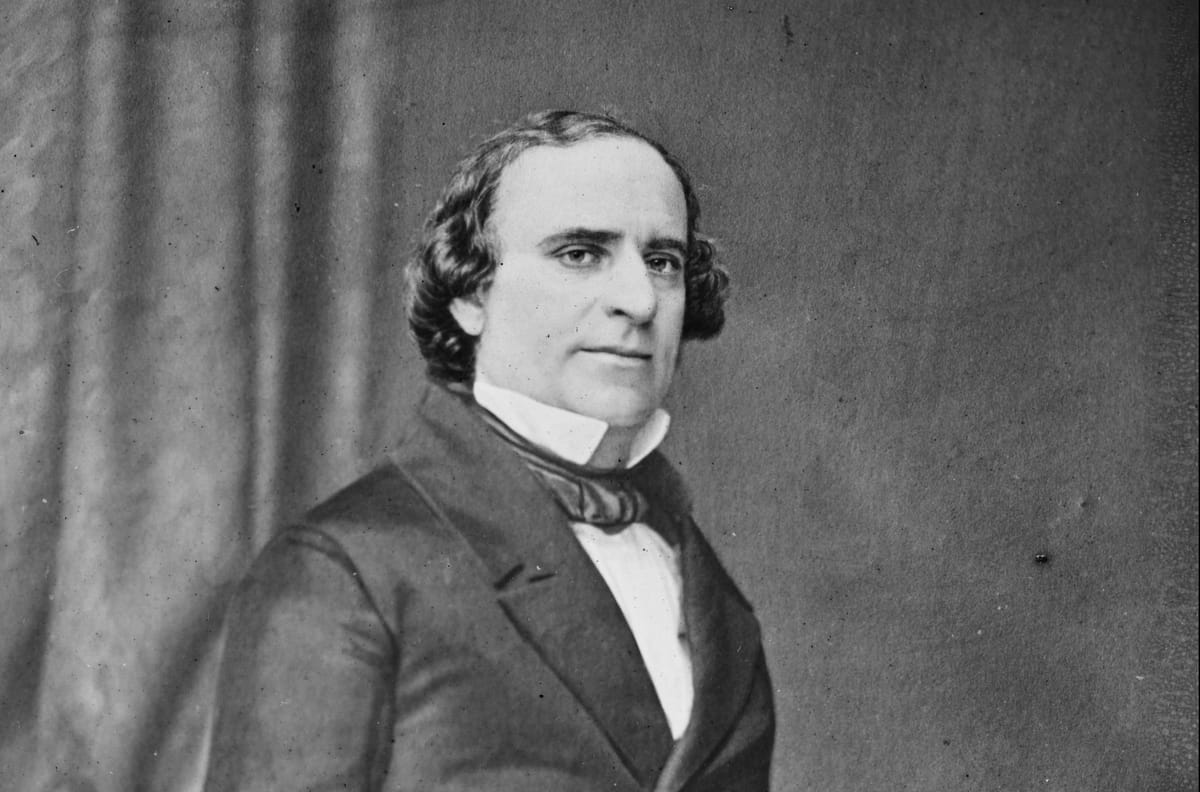
David Levy Yulee stood among Florida's most powerful antebellum figures, a major slave owner who built his wealth and political career on the backs of enslaved African Americans. Born into a Sephardic Jewish family in the West Indies, Yulee would convert to Christianity while becoming one of the South's most vocal defenders of slavery.
Yulee entered the world on June 12, 1810, in Charlotte Amalie, St. Thomas, then part of the Danish West Indies. His father, Moses Elias Levy, was a Moroccan Jewish businessman who had made a fortune in lumber trading. His mother, Hannah Abendanone, came from a Sephardic family with roots tracing back to the Spanish expulsion. The Levy family lived in the Caribbean during British occupation of the Danish West Indies, where they operated as traders and merchants in the colonial economy.
The family immigrated to Florida in the early 1820s when David was a child. His father purchased 50,000 acres of land near present-day Jacksonville, establishing one of the territory's largest landholdings. Young David Levy was sent to a boys' academy in Norfolk, Virginia, for his education before returning to Florida to study law.
Yulee's political rise began in the 1830s during Florida's territorial period. He served in the territorial militia during the Second Seminole War and was elected to the Florida Territorial Legislative Council in 1836. By 1841, he had won election as Florida's territorial delegate to the U.S. House of Representatives. After Florida achieved statehood in 1845, the legislature elected him to the U.S. Senate, making him the first person of Jewish ancestry to serve in that body.

In 1846, shortly after his marriage to Nancy Christian Wickliffe, daughter of Kentucky's former governor, Yulee officially changed his name by an act of the Florida Legislature, adding his father's Moroccan Sephardic surname. That same year, he converted from Judaism to Episcopalian Christianity. He and his wife raised their children in the Christian faith, though Yulee faced antisemitism throughout his political career despite his conversion.
Yulee's wealth rested on the Margarita Plantation, a 5,000-acre sugar cane operation along the Homosassa River worked entirely by enslaved African Americans. The plantation's sugar mill processed cane into syrup, molasses, and rum for profitable sale in domestic and international markets. Enslaved workers endured brutal conditions: field hands cut cane with machetes under the Florida sun, while mill workers operated dangerous cane presses that crushed fingers and boiled juice that caused severe burns. The mill's furnaces created sweltering temperatures that compounded the already exhausting labor.
Beyond agriculture, Yulee earned the title "Father of Florida Railroads" through his founding of the Florida Railroad Company in 1853. He secured federal and state land grants under the Florida Internal Improvement Act of 1855, using enslaved labor alongside Irish immigrants to build rail lines through Florida's wilderness. The railroad connected Fernandina on the Atlantic coast to Cedar Key on the Gulf of Mexico, completing just weeks before the Civil War began in March 1861.
In the Senate, Yulee became known as the "Florida Fire-Eater" for his inflammatory pro-slavery speeches. He actively worked to expand slavery into new territories and states. Though he publicly denied favoring secession, Yulee privately urged the occupation of federal forts and arsenals in Florida. In January 1860, he and fellow Senator Stephen Mallory requested a War Department inventory of munitions in Florida forts, then wrote to a state contact that "the immediately important thing to be done is the occupation of the forts and arsenals in Florida."
When Florida seceded, Yulee resigned his Senate seat in January 1861 to support the Confederacy. He served the Confederate cause throughout the war, and after its conclusion, federal authorities imprisoned him for nine months at Fort Pulaski for treason, specifically for aiding Confederate President Jefferson Davis's escape in 1865. President Andrew Johnson eventually pardoned him, and Yulee returned to Florida to rebuild his railroad interests.
The Union Navy's blockade during the Civil War cut off Yulee's markets, forcing his sugar mill to close. In May 1864, Union forces burned his plantation home on Tiger Tail Island, which had been used as a Confederate supply depot. The mill itself survived but never reopened. The enslaved people who had built Yulee's fortune gained their freedom at the war's end.
Yulee spent his postwar years rebuilding Florida's railroad infrastructure. He hosted President Ulysses S. Grant in Fernandina in 1870 and retired to Washington, D.C., in 1880. He died on October 10, 1886, in New York City at age 76 and was buried in Oak Hill Cemetery in Washington.
Today, the town of Yulee, Florida, and Levy County bear his name. A statue stands in Fernandina Beach, and the state designated him a "Great Floridian" in 2000. The Yulee Sugar Mill Ruins Historic State Park preserves the remains of his plantation operation, where interpretive materials now acknowledge the enslaved labor that built his empire. The site stands as a testament to the complex and painful history of a man who rose from Caribbean Jewish immigrant origins to become one of the South's most powerful slave owners, then abandoned his ancestral faith while defending the institution of human bondage until the Confederacy's collapse.
Sources:
- National Archives, 1860 U.S. Census Slave Schedules
- Florida State Parks, Yulee Sugar Mill Ruins Historic State Park
- U.S. Senate Historical Office
- American Jewish Archives
- Washington Post, "More than 1,800 congressmen once enslaved Black people" (January 2022)
- University of Florida, David Levy Yulee Papers collection


