
TAE Technologies and the Fusion Endgame: Engineering the Power Plant of the Future
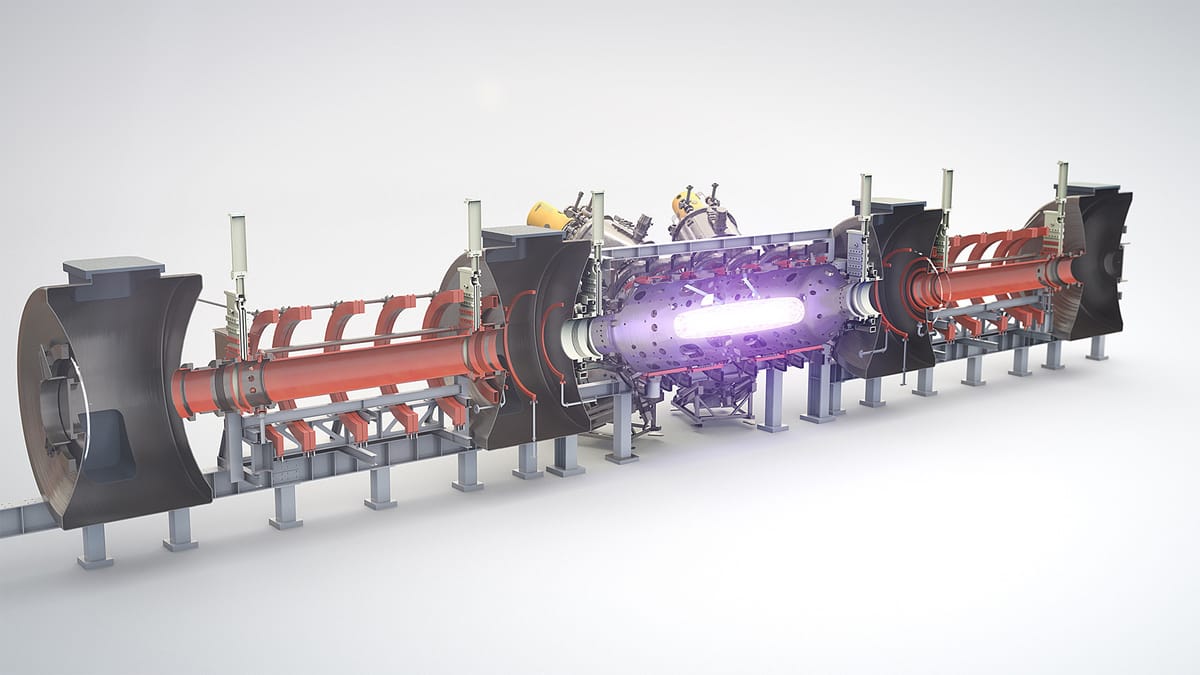
Fusion has always been the holy grail of energy: carbon-free baseload power, no long-lived high-level waste profile like traditional fission, and fuel pathways with the potential for global scalability. The challenge has never been ambition. It has been physics, control, and engineering at extreme conditions.
That’s where TAE Technologies has positioned itself: not as a “fusion someday” story, but as a deep-tech company focused on turning plasma science into a commercially viable power architecture.
Why TAE Matters in the Fusion Race
TAE Technologies is building toward a fusion system based on advanced plasma confinement and high-performance control systems. In practical terms, that means solving a brutal stack of problems simultaneously:
- maintaining stable plasma at ultra-high temperatures
- minimizing instabilities that collapse confinement
- optimizing input energy vs. fusion output pathways
- engineering hardware that survives sustained thermal and electromagnetic stress
Fusion has no shortage of prototypes. What separates contenders is whether their approach can eventually scale from scientific milestone to grid-ready machine.
The Core Tech Thesis: Control Is the Product
The future of fusion won’t be won by one breakthrough headline. It’ll be won by control loops, power electronics, diagnostics, and repeatability.
TAE’s strategy reflects that reality. Fusion is as much a computational and systems-engineering problem as it is a plasma problem. Real-time feedback, machine learning-assisted optimization, and precision energy management are likely to define who reaches commercial deployment first.
In other words: the real innovation isn’t just “making fusion happen once.” It’s making it happen reliably, economically, and continuously.
Commercial Lens: From Lab Physics to Energy Infrastructure
For investors and industry watchers, the key filter is simple:
- Can the physics scale?
- Can the machine run consistently?
- Can it be built at a cost the grid can absorb?
If fusion companies clear those gates, the upside is structural: dispatchable clean power for data centers, industry, and national grids under decarbonization pressure.
If they don’t, fusion remains a high-budget science project with limited near-term infrastructure impact.
Why This Is Bigger Than One Company
TAE’s progress is part of a wider deep-tech shift: the convergence of advanced materials, AI-driven control systems, power electronics, and climate-era energy demand.
That convergence is critical right now. The world is moving into a power-hungry cycle driven by:
- AI compute expansion
- electrification of transport and industry
- geopolitical pressure for energy independence
Fusion sits at the center of that long-duration macro trend.
Bottom Line
TAE Technologies is one of the most important companies to watch in fusion energy because it is attacking commercialization, not just experimentation. The path is still hard, capital-intensive, and technically unforgiving — but the prize is enormous: a new class of clean, high-density power for the 21st century grid.
In the fusion race, hype is cheap. Control, repeatability, and engineering discipline are not. That is exactly where this story will be decided.


