Trump's NATO Threat: How Real Is It — And Who Actually Controls Treaties?
Trump is threatening to pull the US out of NATO. The 2023 law says Congress must approve it. The DOJ says the president has exclusive treaty power. Here's what's actually happening.
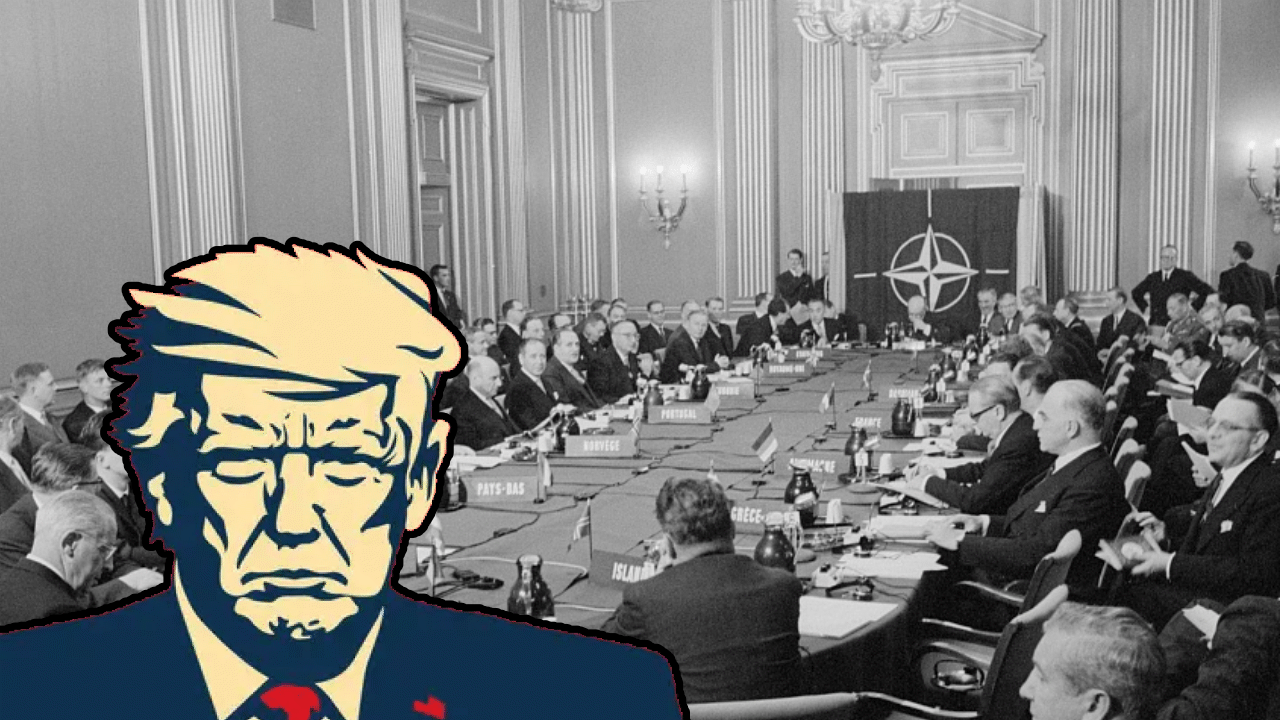
As of April 2026: Threat Level = Loud. Action Level = Blocked (For Now.
Here's where things actually stand.
The Threat
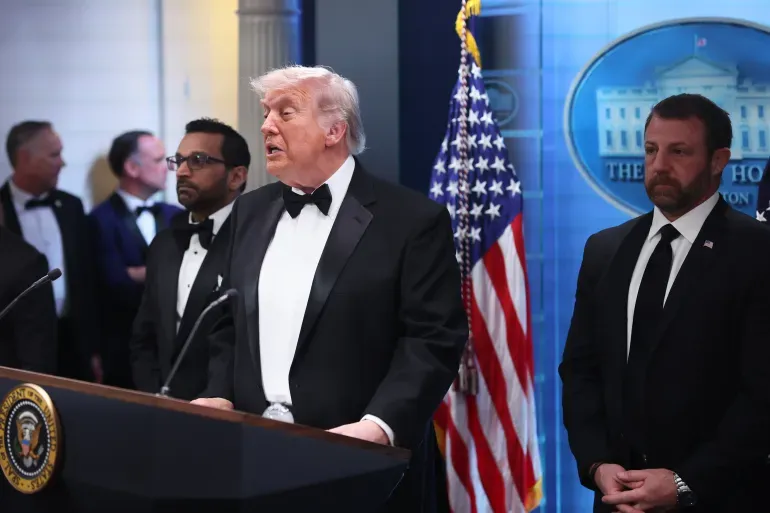
Trump is seriously threatening to pull the U.S. out of NATO, calling it a "paper tiger" that refused to help with the Iran war — which began February 28 with U.S.-Israeli airstrikes — or reopen the Strait of Hormuz. He said NATO membership is "beyond reconsideration" and was expected to address the nation on it.
The Iran war itself has created cascading fallout. European allies refused to send ships to help reopen Hormuz or join U.S. operations. Britain, France, Germany and others drew hard lines: "This is not our war, and we're not going to get dragged into it," British Prime Minister Keir Starmer said. That defiance lit the fuse on Trump's fury.
The Legal Problem
In 2023, Congress passed — and Biden signed — a law requiring any NATO withdrawal to have two-thirds Senate approval. Marco Rubio, now Secretary of State, co-sponsored it. He said at the time:
"Any decision to leave the alliance should be rigorously debated and considered by the U.S. Congress."
Now he says the opposite:
"Ultimately that's a decision for the president to make."
That's not a legal argument. That's a loyalty pivot with a press release attached.
The Executive Branch Counter
Here's the part that actually matters. The DOJ's Office of Legal Counsel — from Trump's first term in 2020 — issued an opinion saying the president has exclusive authority to withdraw from treaties without Congress. That memo has never been tested in court.
The White House can cite that to argue the 2023 law is unconstitutional. If this ends up at the Supreme Court — which has never heard a treaty withdrawal case on its merits — the outcome is genuinely unknowable. The Court's conservative majority has often ruled in Trump's favor, but treaty law is uncharted territory.
The Treaty Clause: President Controls Treaties
Under the U.S. Constitution, the president negotiates treaties with Senate consent. But the Constitution is silent on withdrawing from them. Custom and historical practice have generally given presidents that power too — Trump himself withdrew from the Open Skies treaty in 2020 without Congressional approval, and nobody stopped him.
So the legal picture is genuinely contested:
- Congress says: You need two-thirds of the Senate
- The executive says: The president has exclusive treaty power, including withdrawal
- The courts: Haven't ruled yet
The Real Blunt Force
Here's the uncomfortable truth that the law doesn't capture. Max Bergmann, formerly of the State Department and now at CSIS, put it plainly:
"If the president and the military aren't committed to NATO and European security, then I don't think there's much Congress can actually do to hold that back."
The 2023 law says withdrawal requires Senate approval. But if the commander-in-chief simply... doesn't act like an ally — if Defense Secretary Pete Hegseth keeps refusing to reaffirm Article 5 — the legal authority is irrelevant. NATO's deterrence is built on credibility. If the U.S. signals it won't show up, the alliance weakens whether or not the paperwork is filed.
The Off-Ramp
Despite all the noise, there are genuine signs of de-escalation:
- Iran reportedly asked for a ceasefire — Tehran denied it, saying the Strait will reopen "but not for you"
- The UAE is reportedly preparing to help Washington reopen Hormuz by force
- Britain is convening allies to push for diplomatic off-ramps
- Oil futures fell Wednesday on ceasefire hopes
Bottom Line
Trump is maxing out the pressure. He's using NATO as a bargaining chip in the Iran/Hormuz standoff, and the alliance's decades of free-riding on U.S. security guarantees have finally produced a bill.
A formal withdrawal is legally murky — the 2023 law probably blocks it, but the DOJ memo and a sympathetic Supreme Court create real uncertainty. What's less murky: the practical decoupling of U.S. security guarantees from Europe is already happening. Hegseth's refusal to reaffirm Article 5 was the real signal. The rest is performance.
The safest read: this is a negotiating tactic wrapped in a tantrum, and Europe knows it. But the longer it goes on, the more the signal becomes the substance — and the harder it is to walk back.